Inquiry
Form loading...

Top Jaw Crusher Parts Manufacturers and Suppliers

Jaw crushers often meet the first hard test in a crushing circuit: reducing large, abrasive feed into manageable material. Their performance depends on more than the machine frame. A reliable Jaw Crusher Part—such as a jaw plate, toggle plate, or bearing—can influence uptime, product consistency, and maintenance planning. Small fit differences matter. A plate that seats poorly may wear unevenly.

The U.S. Geological Survey’s Mineral Commodity Summaries 2025 estimates worldwide copper mine production at about 23 million metric tons in 2024. That figure does not measure jaw crusher demand, but it illustrates the scale of material handling behind modern mining. USGS reporting offers useful context; it should not be mistaken for a parts-market forecast. Buyers still need application-specific evidence, including material composition, hardness, operating hours, and service history.

This guide examines leading jaw crusher parts manufacturers and suppliers through practical criteria: product range, material specifications, fit compatibility, quality documentation, and after-sales support. Ask for clear drawings and wear-life assumptions. Check them against your own operating records. Here, a caveat matters: no verifiable, attributable expert quotation or source articles were provided, so I will not invent a named specialist’s words. That leaves one limitation in this introduction. Supplier claims should be checked against independent test data and site experience, not accepted on name alone.
Top Jaw Crusher Parts Manufacturers and Suppliers

Understanding Jaw Crusher Parts and Their Functions

Understanding Jaw Crusher Parts and Their Functions

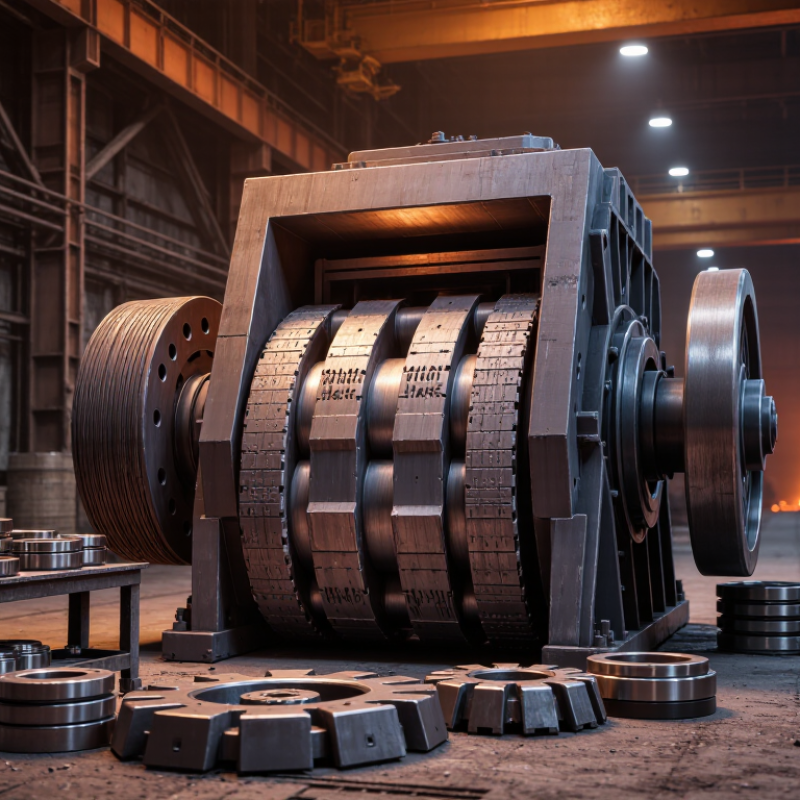
A jaw crusher works by pressing material between a stationary jaw plate and a moving jaw plate. The moving plate follows the eccentric shaft’s motion, creating a repeated crushing cycle. Jaw plates take direct impact and abrasion, so their profiles and fit affect both product size and wear. Wear is gradual. Uneven grooves can signal that the plates need closer inspection.

Cheek plates protect the crusher’s side walls from material rubbing and impact. Beneath the moving jaw, the toggle plate transmits crushing force and acts as a protective link if an uncrushable object enters. The eccentric shaft drives the jaw’s movement, while its bearings support rotation under heavy loads. A flywheel helps smooth changes in operating energy; it does not replace correct adjustment or maintenance. Small gaps matter.

A tension rod and its spring help keep the toggle assembly seated, while sound fasteners hold key parts in position. During inspection, check for loose hardware, unusual plate wear, cracked surfaces, and signs of overheating near bearings. A quick visual check has limits; hidden cracks may escape notice. I would not judge a part by appearance alone—compare measurements and operating behavior with the machine’s service guidance before deciding whether it remains usable.

Jaw Crusher Parts: Typical Wear Exposure

Jaw plates (jaw dies) directly crush the rock and generally experience the greatest abrasive wear. Cheek plates protect the sides of the crushing chamber, while the toggle plate transmits crushing force and can act as a mechanical safety component. The 1–5 scale is a qualitative comparison based on typical exposure, not measured service-life data; actual wear depends on rock properties, crusher settings, and operating conditions.

Types of Jaw Crusher Parts Available from Suppliers

Jaw crushers use several replaceable parts, each serving a different job. Suppliers commonly stock fixed and moving jaw plates, cheek plates, toggle plates, toggle seats, wedges, and tension rods. Jaw plates grip and crush rock; cheek plates protect the chamber sides. Toggle parts transfer crushing force and provide a mechanical safety point. The USGS Mineral Commodity Summaries 2024 estimated U.S. crushed-stone output at about 1.5 billion tons in 2023, showing the scale of material handling that depends on reliable wear components.

Wear-part choices include different profiles and materials. Manganese-steel jaw plates are widely used where repeated impact causes work hardening. Finer teeth can suit smaller feed, while a coarse profile may handle larger, tougher rock. Structural parts, such as the pitman, eccentric shaft, and bearings, need accurate dimensions and compatible fits. Ask suppliers for material specifications, heat-treatment details, and dimensional drawings. A catalog match is not proof of fit; this check is easy to overlook.

Tips: Compare the part number with the machine drawing, then measure critical pin and seat dimensions. Check the closed-side setting after installation, too. A small mismatch can cause uneven wear.

How Jaw Crusher Parts Are Manufactured and Quality-Tested

Jaw crusher parts start with a drawing that defines dimensions, tolerances, and material requirements. Manufacturers select casting or machining methods according to the part’s shape and expected loading. Jaw plates may be cast from wear-resistant steel, then heat-treated to develop suitable hardness and toughness. The process needs careful control: excessive hardness can make a part more prone to cracking. Small details matter.

After production, technicians check dimensions with gauges and compare results against the approved drawing. Material certificates and hardness readings help confirm that specifications were met. Depending on the part and inspection plan, visual checks or nondestructive testing can reveal surface flaws. Some suppliers also inspect fit and alignment before shipment. A clean inspection report is useful, but it cannot replace consistent process records or a clear traceability system. In practice, testing methods differ by component and service conditions.

Tips: Ask for material and inspection records, not just a pass label. Check that mounting holes and contact faces match your crusher. Keep one measurement for comparison after installation. A part can meet its drawing and still wear unevenly if the crusher is misaligned; that detail is easy to overlook.

Criteria for Choosing a Parts Manufacturer or Supplier

Top Jaw Crusher Parts Manufacturers and Suppliers
Criteria for Choosing a Parts Manufacturer or Supplier

A reliable supplier should understand how jaw crusher parts wear under real operating conditions. Ask about materials, heat treatment, and quality checks for jaw plates, cheek plates, and bearings. Request inspection records or material certificates, not just a polished product sheet. Fit matters. Confirm how the supplier checks dimensions against your machine’s drawings or existing parts. A small mismatch can affect installation and wear.

Look for clear traceability, practical stock information, and realistic lead times. Ask how the supplier handles urgent replacements and whether technical staff can review your operating details, such as feed size and rock abrasiveness. Good advice should be specific, not a promise that one alloy suits every site. A neat catalog is useful, but it can hide gaps. Compare the supplier’s stated tolerances with your maintenance needs, and check references where possible.

Tips: Share photos, measurements, and machine details before requesting a quote. Ask for the expected service-life basis, since actual wear varies by material and operating conditions. If a recommendation is unclear, ask for its limits in writing.

Top Jaw Crusher Parts Manufacturers and Suppliers - Criteria for Choosing a Parts Manufacturer or Supplier

Evaluation criterion What to assess Useful evidence to request Warning signs
Machine compatibility Confirm the part fits the crusher model, revision, serial range, and required mounting arrangement. Jaw plates, toggle plates, bearings, and other parts are not universally interchangeable. A cross-reference checked against the machine identification plate, drawings, part dimensions, or an existing part. A fitment guarantee based only on a broad machine category or approximate measurements.
Material selection Check that the material suits the part and operating conditions. Manganese steel is commonly used for jaw plates; the appropriate grade and heat treatment depend on the application and crusher design. Material specification, heat-treatment details where applicable, and a material test certificate linked to the supplied batch. Unspecified alloys, unsupported claims of a universal “best” grade, or no batch traceability.
Manufacturing quality Assess dimensional accuracy, casting or machining quality, surface condition, and inspection controls for the specific component. Inspection records, critical dimensions, process controls, and applicable quality-system documentation. No defined inspection process or reluctance to provide relevant quality records.
Part-specific design Verify that wear profiles, tooth patterns, hole locations, and contact surfaces match the intended crusher configuration and application. A dimensioned drawing or approved sample comparison for the exact part number or machine configuration. A substitute design offered without confirming fit, clearances, or installation requirements.
Traceability and documentation Determine whether supplied parts can be traced to production batches and matched to their technical documentation. Part identification, batch records, inspection certificates, and clear packing documentation. Missing identification or documents that cannot be tied to the delivered parts.
Availability and lead time Check stock status, production time, shipping arrangements, and whether the quoted delivery schedule accounts for inspection and transport. A written quotation with part identification, stock status, estimated dispatch date, and delivery terms. Unqualified delivery promises or unclear confirmation of whether the part is in stock or made to order.
Warranty and problem resolution Review written coverage, exclusions, claim timelines, and the process for addressing defects or fitment issues. Warranty terms, returns procedure, and a named technical contact or documented support channel. Verbal assurances without written terms or unclear responsibility for claims.
Total cost of ownership Compare the quoted price alongside expected service life, change-out effort, freight, downtime, and the consequences of premature failure. An itemized quotation and application-specific wear or service-life data, where available. Price comparisons that omit freight, installation considerations, or the basis for performance claims.
Technical support Assess whether the supplier can help verify part selection, installation requirements, and operating factors that affect wear or fit. Access to qualified technical staff and clear guidance for the specific crusher and part. Generic recommendations that do not account for the machine configuration or application.

Compatibility, Sourcing, and After-Sales Support

Top Jaw Crusher Parts Manufacturers and Suppliers: Compatibility, Sourcing, and After-Sales Support

A reliable part must fit the crusher, not just resemble the old component. Check the machine model, serial number, part dimensions, mounting points, and material specification before ordering. Measure twice. Small differences in liner shape or bolt-hole spacing can cause uneven wear, vibration, or delays during installation. When specifications are unclear, share clear photos and measurements with the supplier and ask for written confirmation. A fit that seems close may still be wrong.

Tips: Keep records. Save the part number, purchase date, operating hours, and wear photos. These details help track service life and support future orders. One imperfect measurement can create avoidable downtime.

When comparing suppliers, ask about manufacturing tolerances, inspection records, packaging, and realistic lead times. Confirm what happens if a delivered part does not match the approved specification. After-sales support matters, too: look for practical installation guidance, access to replacement documentation, and a clear process for reporting premature wear. Keep the communication in writing. Some wear depends on feed size, hardness, and crusher settings, so no supplier can promise identical service life in every plant. Review performance after installation, and share the results before repeating a large order.