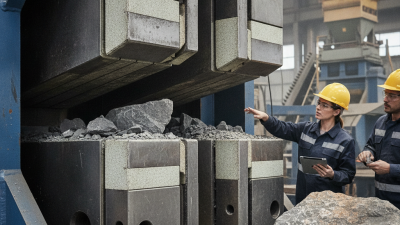
Mining operations rarely fail because of one dramatic decision. More often, a jaw plate wears unevenly, a closed-side setting drifts, or an unsuitable alloy quietly reduces production. That is why selecting Mining Machinery Jaw Plates requires more than comparing purchase prices. It requires evidence from the feed material, crusher model, operating rhythm, and maintenance history.
The United States Geological Survey reported approximately 2.5 billion metric tons of iron ore production worldwide in 2023. Meanwhile, the United Nations Environment Programme estimates that 50 billion tonnes of sand and gravel are extracted annually. These figures show the scale of crushing demand. They also explain why small wear-rate differences can create significant costs. Dr. S. K. Kawatra, a respected mineral-processing specialist, has stated, “Comminution is the largest energy consumer in mineral processing.” His point is practical: every poorly selected plate can waste energy, time, and usable material.
This guide presents ten purchasing tips for Mining Machinery Jaw Plates, including tooth profile, manganese grade, fit accuracy, expected throughput, and supplier traceability. Look closely at the plate surface after several shifts. A bright polished zone may reveal abrasion; deep grooves can indicate poor feed distribution. The choice is not always perfect. Laboratory data may not match a wet quarry or a cold mine site. That uncertainty deserves attention, not concealment. Reliable buyers compare test results, inspect wear patterns, and request measurable performance claims before approving a long-term order.
Jaw Plate Materials: Compare 12–14% and 18–22% Manganese Steel
Choosing jaw plates requires more than comparing prices. The manganese percentage affects toughness, hardness, and work-hardening behavior. Plates containing 12–14% manganese often suit moderate crushing conditions with balanced impact and abrasion. They can perform well when feed size is controlled and tramp material is limited. Plates with 18–22% manganese generally offer stronger resistance to heavy impact and repeated shock. They may be better for large rocks, inconsistent feed, or demanding quarry work. However, higher manganese content does not automatically mean longer service life.
Tip 1: Check the feed first. Record rock hardness, moisture, maximum size, and daily tonnage. A highly abrasive feed may wear a softer plate quickly, even when impact is low. A tough plate can also wear unevenly if the jaw profile is unsuitable. Inspect the worn surface after several shifts. Look for cracking, deep grooves, or a smooth hardened layer.
Tip 2: Confirm the actual material certificate. Do not rely only on a sales description. Ask for chemical composition, heat-treatment details, hardness data, and dimensional tolerances. In field checks, I have seen small fitting errors create loose movement and premature damage. That lesson is easy to miss. Compare wear after a fixed tonnage, not after an arbitrary number of operating days. Keep notes, because operating conditions often change more than expected.
Buying jaw plates is not just a matter of choosing the thickest option. Start with crusher compatibility. The plate must fit the chamber, mounting holes, and seating surfaces precisely. Check these details against verified machine drawings. A nearly correct plate can still shift under load. That mistake is expensive.
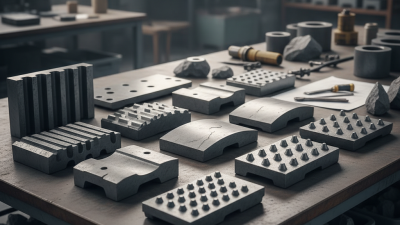
Match the tooth or corrugated profile to the material and required product size. A coarse profile can improve grip on larger, tough rock. A fine profile may control smaller feed, but it can wear quickly with abrasive material. Review CSS, not only the nominal gap. Measure the closed side setting at the discharge point after proper isolation. CSS directly affects crushing action and output size. I have seen operators blame plate quality when CSS was simply set too tight. That assumption deserves a second look.
Feed size is equally important. Oversized rock can strike the plate and create deep cracks or uneven wear. Compare the largest expected lump with the recommended feed limit and chamber opening. Keep the feed centered. Uneven loading creates localized grooves and shortens service life. Record plate weight, wear depth, and operating hours during inspections. These notes support a more reliable replacement decision than appearance alone. Still, field conditions vary. A profile that worked last season may not suit wetter or more fractured material. Recheck the match when quarry conditions change.
The chart compares typical jaw-plate profiles with commonly associated closed-side settings (CSS) and maximum feed-size ranges. Coarse profiles generally support larger feed, while fine profiles are better suited to smaller feed and tighter CSS. Always verify the operating range against the crusher’s technical manual, chamber geometry, and material characteristics before purchasing plates.
When buying jaw plates, treat 180–220 HB initial hardness as a starting measurement, not a performance guarantee. Brinell testing should be recorded on the plate body, away from cut edges and casting defects. Ask for heat-treatment records, chemical ranges, and test locations. A reliable supplier should explain sample preparation and calibration. In my inspections, uneven readings often reveal poor cooling or mixed batches. That detail matters. A plate at 185 HB may wear differently from one at 215 HB, even when both meet the stated range. Check the crushing duty, too. Hard, abrasive stone needs a different balance than softer, sticky feed.
Work hardening changes the picture after installation. Repeated impact can raise surface hardness, but the rate depends on impact energy, alloy chemistry, feed gradation, and chamber settings. Record plate thickness before installation, then measure high-contact zones during planned shutdowns. Photograph the tooth profile beside a ruler. Compare wear near the feed opening, center, and discharge end. A plate that hardens well should develop a tougher surface without deep cracking or rapid tooth loss. Do not judge it from one shift. That is a common mistake. I once trusted a hardness certificate too quickly; the plate performed poorly because the crusher was overfed with fines. The lesson is uncomfortable: material data needs operating evidence. Review the closed-side setting, tramp events, and liner seating during every inspection. Check fasteners, too. Loose movement can imitate poor wear resistance.
Lifecycle cost matters more than the purchase price when selecting jaw plates. A low-cost plate may wear quickly, forcing frequent changes and unplanned stoppages. The U.S. Department of Energy’s Mining Industry Energy Bandwidth Study estimates crushing and grinding consume about 23% of mining energy. Poorly matched plate profiles can increase this burden through recirculation and uneven crushing.
Compare wear rate, change intervals, and downtime together. For example, a plate costing £4,000 and lasting 500 hours costs £8 per operating hour. A £6,500 plate lasting 900 hours costs about £7.22 per hour. The cheaper option is not always cheaper. Add labor, lifting equipment, inspection time, and lost production. A six-hour change during a 300-tonne-per-hour operation represents 1,800 tonnes of delayed capacity, before recovery delays.
Deloitte’s 2024 Tracking the Trends report identifies productivity and operational resilience as continuing mining priorities. Jaw plate selection supports both, but estimates remain site-specific. Abrasive quartzite, wet feed, tramp material, and poor CSS control can change results sharply. Ask suppliers for test data using similar feed conditions. Record thickness loss every shift, not only at changeout. I would also challenge optimistic wear claims; one reliable site trial is worth more than a polished brochure.
10 Tips for Buying Mining Machinery Jaw Plates
A jaw plate can look excellent and still fail early. Check the material certificate, heat-treatment record, and batch number. Tip 1: Confirm the steel grade matches the approved drawing. Tip 2: Request furnace temperature curves, not only a signed certificate. Tip 3: Verify solution treatment and water-quenching details for manganese steel. ASTM A128 identifies chemical and mechanical requirements for high-manganese cast steel. Hardness alone cannot prove correct toughness. Tip 4: Require hardness readings from several plate zones. Tip 5: Compare readings with the supplier’s approved specification.
Dimensions decide whether the plate seats correctly. Tip 6: Measure length, thickness, hole locations, tooth profile, and mounting surfaces. Tip 7: Check tolerances against the machine drawing, not a catalogue image. Tip 8: Use calibrated gauges and keep inspection photographs. The ISO 9001 quality framework stresses documented verification and traceability. However, certification does not guarantee every plate fits. That assumption causes expensive mistakes. Tip 9: Conduct a trial fit before shipment when possible. Tip 10: Confirm 100% interchangeability using a signed inspection report. The report should record measured values, tolerances, inspector details, and nonconforming areas.
The Global Mining Guidelines Group links reliable maintenance data with better equipment performance. This supports a practical buying rule: connect quality checks with operating records. Record feed size, moisture, chamber setting, and service hours. These details explain uneven wear. A careful supplier should discuss them openly. I would still recheck one plate manually, even after a passed inspection. Small casting variations can remain. Ask for corrective action when dimensions drift, rather than accepting vague promises.