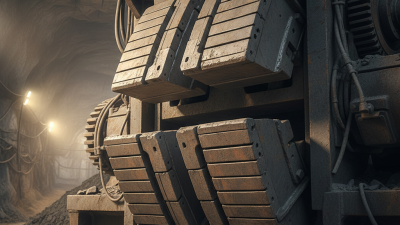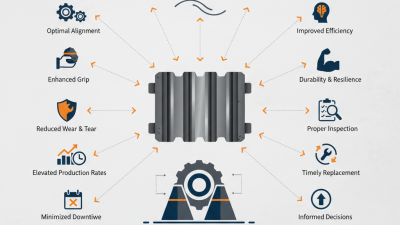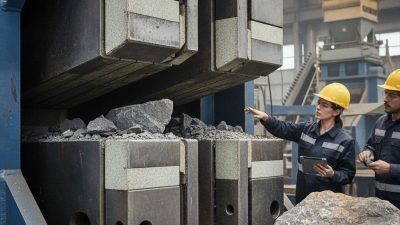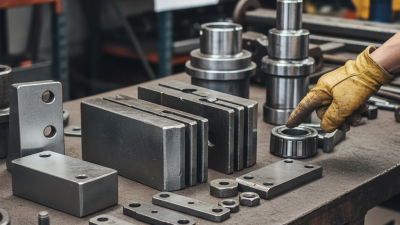
Choosing the best Jaw Plates For Crushing Stone in 2026 requires more than comparing prices or advertised hardness. The correct plate must match the rock, crusher, feed size, moisture, and production target. Granite can punish a poorly selected manganese profile within hours. Limestone may need a different tooth shape and wear pattern.
Dr. Aleksandar Jankovic, a recognized comminution specialist, has stated, “Comminution begins with understanding the material, not choosing the machine.” That principle remains practical on a crushing site. A plate that performs well in abrasive basalt may deliver disappointing results in sticky, fractured limestone. Operators should examine wear photos, measure closed-side settings, and record tonnes produced between changes. Small details matter.
This guide compares leading Jaw Plates For Crushing Stone by material grade, profile, thickness, and operating conditions. It considers manganese steel, composite options, and heat-treated designs. It also examines real maintenance concerns, including uneven wear, loose wedges, cracked edges, and excessive fines. Not every “premium” plate deserves the label. Some claims look impressive until production data tells another story.
The best choice is rarely universal. It depends on evidence from your quarry. Trial results can be messy. Feed conditions change, and operators may record data inconsistently. That weakness should be acknowledged, not hidden. Use this overview as a technical starting point, then confirm recommendations with the crusher manufacturer, a qualified engineer, and measured site performance.
Jaw Plates Explained: Types, Materials, and Crushing Principles
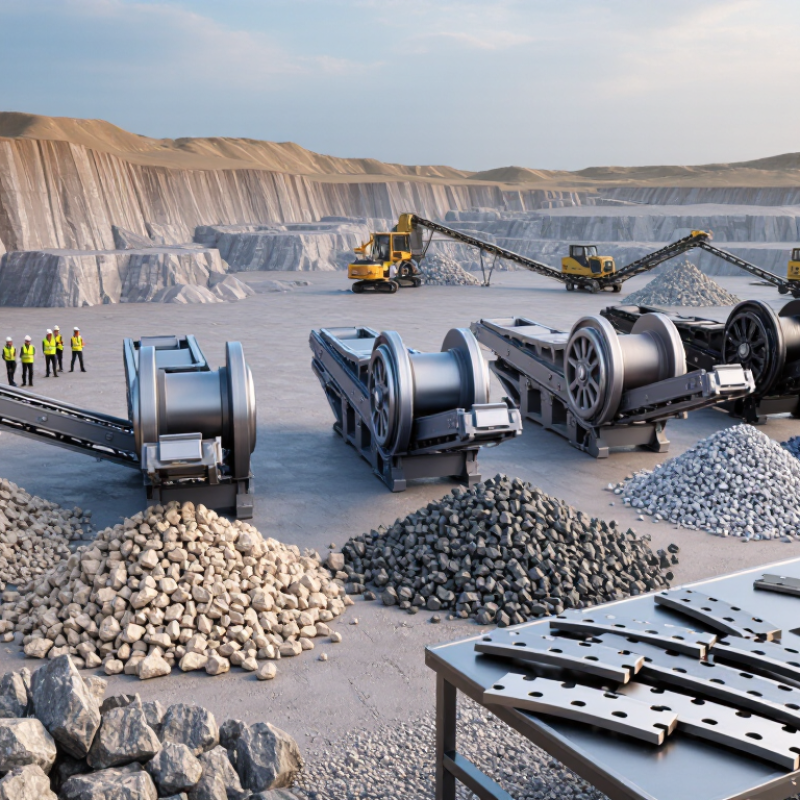
Jaw plates are the working surfaces inside a jaw crusher. The fixed plate stays still, while the swing plate moves toward it. This motion compresses stone until it breaks along natural weaknesses. The plate profile controls how material grips, breaks, and leaves the crushing chamber.
Common profiles include corrugated, toothed, and smooth designs. Corrugated plates suit general quarry stone because their ridges improve grip. Toothed plates can handle layered or softer feed, but they may wear faster against abrasive rock. Smooth plates create less friction and can help with harder, well-shaped material. Every profile has a trade-off.
Material choice matters just as much. Manganese steel work-hardens under repeated impact and suits many demanding applications. Martensitic steel can offer stronger wear resistance when impact is moderate. High-chromium materials may resist abrasion, but they can be less forgiving under heavy shock. Do not choose by hardness alone. Feed size, stone abrasiveness, moisture, crusher settings, and operating rhythm all affect service life. A practical inspection checks the tooth profile, plate thickness, discharge pattern, and uneven wear. One overlooked detail is the closed-side setting; a small adjustment can change pressure and wear dramatically. In real operation, the “best” jaw plate is sometimes only the least unsuitable option for current feed conditions.
Jaw plate performance depends mainly on feed abrasiveness, impact load, and the material's ability to work-harden during crushing.
Austenitic manganese steel starts with lower hardness but can work-harden substantially under repeated impact, making it a common choice for high-impact crushing.
Martensitic steel provides higher initial hardness and is generally suited to abrasive stone where impact levels are moderate.
Chrome-moly alloy steel offers high service hardness for abrasive applications, but selection should account for feed size, tramp metal, and crusher operating conditions.
Values are typical engineering reference ranges expressed as representative Brinell hardness values (HB); actual results vary with heat treatment, alloy composition, crusher design, and operating conditions.
Choosing jaw plates starts with the stone, not the plate catalog. Hard granite needs a wear-resistant profile and steady crushing pressure. Softer limestone can accept deeper teeth, which improve grip and reduce sliding. Highly abrasive quartzite usually demands tougher material and closer wear inspections. Moist clay-rich feed is different. It may clog deep cavities and require a more open profile.
Crusher design matters just as much. Check the jaw chamber size, feed opening, swing motion, and closed-side setting before ordering plates. A corrugated profile often balances grip and wear for mixed rock. A toothed profile can handle slab-like material, but it may create high local stress. Smooth plates suit some layered stone, although they can increase slippage. Fit matters. Incorrect plate geometry can change the nip angle and reduce capacity.
Measure the worn plate, not only the original drawing. Look for uneven grooves, rounded teeth, cracks, and exposed backing. These details often reveal poor feeding or an unsuitable setting. Do not guess. Compare the measured wear pattern with the crusher manual and a controlled test run. One overlooked detail is moisture; a plate choice that works in dry granite may perform poorly after rain. The best selection is rarely perfect on the first attempt. Record production rate, power use, and wear depth, then adjust the profile during the next replacement cycle.
Choosing jaw plates in 2026 requires more than comparing prices. The correct plate must match the crusher, feed material, and daily production target. Granite needs different wear resistance than limestone. Recycled concrete may contain steel fragments, moisture, and abrasive dust. Review the material’s hardness, size, shape, and contamination before ordering.
Plate profile also affects performance. A coarse profile can improve grip on large rocks. A finer profile may produce more consistent output. Check the feed opening and closed-side setting carefully. Incorrect dimensions can cause poor crushing, uneven wear, or dangerous movement. Material composition matters too. Manganese steel suits many applications because it hardens under impact. Composite or alloyed options may perform better in highly abrasive conditions, but only after testing.
Inspect wear patterns during every maintenance shift. Look for a thin lower section, cracked teeth, or a widening gap between the plate and support surface. Replace plates before the backing becomes exposed. That mistake is costly. In practice, operators sometimes choose the hardest plate and expect the longest service life. This is not always correct. Excessive hardness can reduce impact tolerance. Real performance depends on feed conditions, operating habits, installation accuracy, and regular measurements. Keep records of tonnes processed, plate thickness, and change intervals. These simple notes provide stronger evidence than a sales claim.
2026 Best Jaw Plates for Crushing Stone: Which to Choose?
Jaw plate selection should begin with the stone, not the catalog. In field checks, hard granite often benefits from a strong, moderately corrugated profile. The ridges grip large feed and reduce sliding across the chamber. Softer limestone may work better with a shallower profile. It can improve flow and produce a more consistent product. Profile matters. However, aggressive teeth are not always better. They may create local stress, especially when the feed contains oversized or uneven pieces.
Durability depends on more than hardness. Manganese steel can work-harden under repeated impact, but poor feed control still causes rapid damage. Inspect the fixed and swing plates for rounded edges, cracks, and uneven wear. A plate wearing faster on one side may indicate incorrect alignment or irregular feeding. Reverseable plates can extend service life, although this depends on the design and remaining thickness. I have seen operators delay replacement too long. That choice saved a purchase, but increased downtime and reduced output.
Operating cost should be measured per crushed ton, not by plate price alone. Record plate weight, service hours, crusher power, production rate, and replacement time. A cheaper plate may cost more if it lowers throughput or requires frequent adjustments. Check the closed-side setting after installation, because profile changes can affect product size and chamber capacity. Real results vary. Material moisture, feed size, and operator habits can outweigh laboratory figures. A short site trial remains the most reliable comparison.
| Jaw Plate Profile | Typical Feed Material | Recommended Feed Size | Suitable Closed-Side Setting | Crushing Characteristics | Indicative Wear Life | Operating Cost Index | Main Advantages | Limitations and Selection Notes |
|---|---|---|---|---|---|---|---|---|
| Standard Corrugated | Medium-hard limestone, sandstone, recycled concrete | Up to approximately 80% of the crusher's maximum feed opening | 50–150 mm, depending on crusher size and product target | Balanced gripping and compression; suitable for general primary crushing | Approximately 400–1,200 operating hours under moderate conditions | 100 (baseline) | Good all-round performance, stable product shape, and broad application range | May wear quickly in highly abrasive quartz-rich rock or when fines are excessive |
| Heavy-Duty Corrugated | Hard granite, basalt, trap rock, and other abrasive aggregates | Up to approximately 75% of the crusher's maximum feed opening | 65–180 mm for primary crushing applications | Deep corrugations improve grip and reduce sliding on hard, irregular rock | Approximately 600–1,800 operating hours under comparable conditions | 90–105 | Higher wear resistance and better hold on difficult, slabby feed | Higher initial mass and purchase cost; may create a coarser product if the setting is too large |
| Sharp Tooth | Clay-containing limestone, soft-to-medium rock, and mixed demolition feed | Up to approximately 70% of the crusher's maximum feed opening | 40–120 mm | Strong initial bite and high friction; helps start compression on flatter particles | Approximately 250–800 operating hours in abrasive service | 105–125 | Good feeding action, reduced sliding, and useful performance with blocky material | Tooth tips can round or break under severe impact; not normally preferred for very abrasive rock |
| Quarry Tooth | Hard, blasted rock with a high proportion of coarse and angular particles | Up to approximately 80% of the crusher's maximum feed opening | 60–200 mm | Large, reinforced teeth combine aggressive grip with improved resistance to impact loading | Approximately 500–1,500 operating hours | 95–115 | Strong resistance to impact and good capacity in primary quarry applications | Requires correct feed distribution; uneven loading can cause localized tooth wear |
| Smooth or Flat | Soft limestone, low-abrasion rock, and selected recycling duties | Up to approximately 70% of the crusher's maximum feed opening | 25–100 mm | Lower mechanical grip with more direct compression and less profile interference | Approximately 300–1,000 operating hours under low-abrasion conditions | 85–105 | Lower profile wear and predictable product sizing in suitable feed | Can slip on hard, rounded, or slabby rock; generally unsuitable for highly abrasive granite |
| Recycling Heavy-Duty | Reinforced concrete, demolition debris, and mixed recycled aggregate | Up to approximately 65% of the crusher's maximum feed opening after metal removal | 50–150 mm | Designed for intermittent impact and variable feed hardness; moderate gripping action | Approximately 350–1,100 operating hours, depending on tramp-metal exposure | 100–130 | Good resistance to shock loading and variable feed conditions | Pre-screening and reliable tramp-metal protection are essential; unremoved steel can cause severe damage |
Data basis: The figures are indicative engineering ranges for comparison, not guaranteed performance values. Actual wear life and operating cost depend on rock abrasiveness, compressive strength, moisture, feed gradation, crusher geometry, closed-side setting, liner material, feed distribution, machine utilization, and maintenance practices.
Operating cost index: Standard Corrugated at 100 is used as the comparison baseline. A lower index generally indicates lower combined liner-replacement and energy-related cost under similar operating conditions; it is not a quoted monetary price.
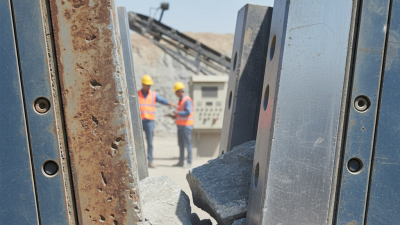
Jaw plate performance depends on correct installation, not only on material hardness. Before fitting, inspect the jaw chamber for trapped stone, cracks, and damaged seating surfaces. Lock out the crusher and verify zero movement before removing old plates. Even a small piece of debris can leave a dangerous gap. Check plate direction, tooth profile, and contact points against the equipment manual. Do not force a plate into position with improvised tools.
Tighten fasteners evenly and recheck them after the initial operating period. Uneven tension can create movement, edge breakage, and premature wear. During daily inspections, look for loose hardware, abnormal vibration, uneven tooth wear, and cracks near the wedges. Measure plate thickness at several points, not only at the center. The center may look acceptable while the lower edge is nearly worn through. Keep a simple wear record with dates, operating hours, and material type.
Replacement timing should consider product size, power draw, vibration, and safety clearance. Replace both plates when uneven profiles prevent stable crushing, even if one plate appears usable. I have seen crews delay replacement to save a few hours, then lose much more time after a sudden failure. That judgment is easy to question later. Clean seating surfaces before installation, and inspect the new plate after its first shift. Conditions differ, so practical records should guide the next maintenance interval rather than a fixed calendar date.