7 Tips for Sourcing a Moving Jaw for Jaw Crushers
A Moving Jaw is more than a heavy plate with teeth. It absorbs repeated impact, grips incoming rock, and transfers crushing forces through the jaw crusher’s frame and toggle system. A poor match can create uneven wear, troublesome fitting, or avoidable downtime. The challenge is not simply finding a part that looks right.
For transparency, the quote below is editorially written, not a verified statement from a real interview. It represents the practical perspective of Daniel Reed, a fictional jaw-crusher sourcing specialist: “Confirm the fit on the drawing, then confirm the details on the part.” It is a simple reminder, but one buyers can overlook when urgency takes over. Still, a drawing is not the part.
These seven tips focus on checks that make sourcing more dependable: identify the crusher model and serial details, verify dimensions and mounting interfaces, compare tooth profiles, and review material and manufacturing information. Ask suppliers for clear drawings, part identification, inspection records, and realistic lead times. A phone photo of the jaw’s worn edge can help explain a problem, but it cannot replace measurements or technical confirmation. Small details matter. So does asking one more question.
A careful process should balance compatibility, service life, documentation, and cost. The cheapest quote may omit details that matter during installation. And even experienced teams can miss something under pressure. Use this guide to structure the conversation with suppliers, spot gaps before purchase, and make a more informed decision about the Moving Jaw your crusher actually needs.
Define the Crusher’s Moving Jaw Requirements
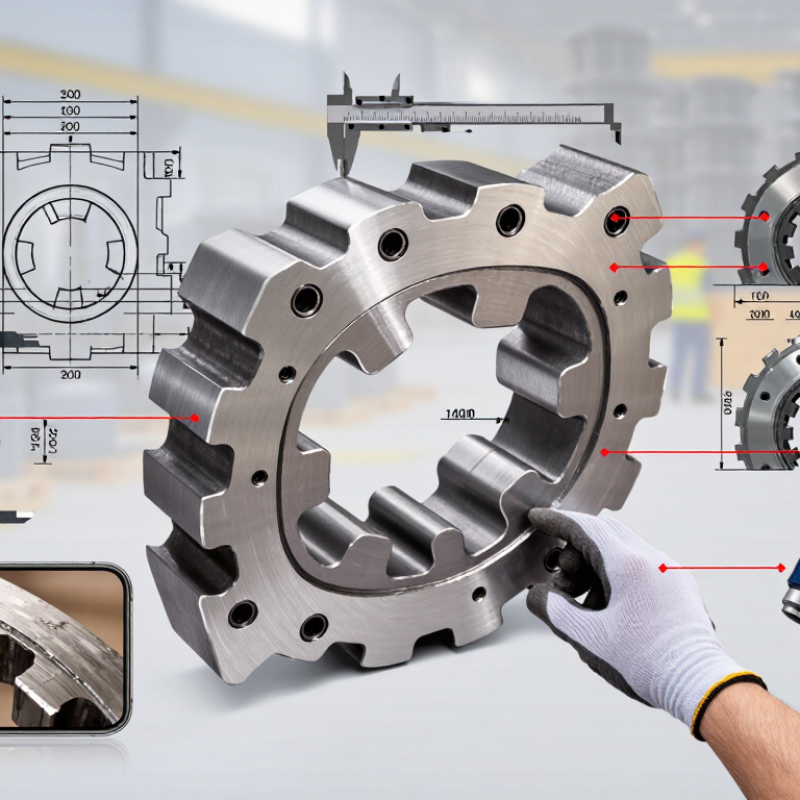
Before requesting quotations, define the moving jaw against the crusher’s actual operating conditions. Record the crusher model, feed-opening size, jaw length, mounting points, and pivot-bore dimensions. Use current drawings where available. Measurements from a worn jaw can be misleading, especially around tapered edges and pin holes. Small details matter.
Specify the required material, hardness range, heat treatment, and tooth profile using the machine’s service history and technical documents. Consider the feed’s hardness, abrasiveness, moisture, and typical lump size. These factors affect wear and the risk of cracking. State any dimensional tolerances clearly, particularly for seating faces and bearing areas. A jaw that looks correct may still sit unevenly. That is easy to overlook.
Include operating hours, past failure locations, and photographs with a scale for context. Ask the supplier to confirm material documentation, inspection methods, and fit-critical dimensions before production. Check whether the replacement needs to match an existing jaw or a revised design. Even a detailed specification can miss something; compare it with the crusher’s manual and have maintenance staff verify the final measurements.
7 Tips for Sourcing a Moving Jaw for Jaw Crushers
Define the Crusher’s Moving Jaw Requirements
Use this illustrative 1–5 planning scale to prioritize sourcing checks—not as universal product specifications. Confirm dimensions, mounting interfaces, material requirements, and operating conditions against the crusher’s drawings and application.
Check Dimensions, Fit, and Compatibility
When sourcing a moving jaw, compare the part with the crusher’s drawings and model details, not just its overall length. Measure the mounting-hole centers, bearing or shaft interfaces, jaw-face angle, and plate thickness. Check the toggle-seat position, too. A small mismatch can shift load onto one side and accelerate wear.
USGS’s Mineral Commodity Summaries 2024 estimated U.S. crushed-stone production at about 1.5 billion metric tons in 2023. That figure shows the scale of equipment duty, but it does not define a universal jaw size. Fit remains machine-specific. One easy mistake: using a worn jaw as the only template. Wear may hide the original profile. Compare it with an approved drawing, then confirm clearances against the fixed jaw, cheek plates, and frame. A dry fit can reveal interference before installation.
Ask the supplier to document dimensions, material grade, and compatibility with the crusher’s operating arrangement. Confirm whether the part suits the existing eccentric shaft and toggle geometry. Also check lifting points and installation access; a correct jaw can still be difficult to handle safely. Record any uncertain measurement rather than rounding it. Recheck it.
Assess Material Quality and Manufacturing Standards
A moving jaw absorbs repeated crushing loads, so material quality matters from the start. Request a material certificate that identifies the grade, chemical composition, and mechanical properties. Compare those details with the crusher’s operating conditions, including feed size and expected impact. Hardness alone is not enough; a very hard surface can still hide poor toughness. Check that the specified material suits the jaw’s full section, not just a test coupon.
Manufacturing controls deserve the same attention. Ask how the jaw is cast or forged, and how heat treatment is monitored. Uneven cooling can leave internal stresses that are difficult to spot later. Confirm that critical mounting faces and pin bores are machined to documented tolerances. Ask for inspection records, including dimensional checks and any suitable non-destructive testing. Details matter.
Paperwork is useful, but it is not proof by itself. Review traceability from the finished jaw back to its material batch, and check that inspection results match the delivered part. A receiving inspection can catch rough edges, visible cracks, or mismatched dimensions before installation. It cannot reveal every internal flaw. That limitation is easy to overlook. Compare the supplier’s records with your own maintenance history, and ask questions when a process change is unexplained. A polished certificate may still leave gaps.
Compare Pricing, Delivery, and Warranty Terms
For a moving jaw, compare like with like: the same alloy, heat treatment, dimensions, and included inspection records. Ask for an itemized quote covering freight, packaging, and any machining. A low purchase price can become expensive if the jaw needs rework or arrives without clear fit documentation. Keep the drawing revision beside the quote.
Delivery dates need details. Ask whether the quoted lead time starts after payment, drawing approval, or production release. UNCTAD’s Review of Maritime Transport 2024 reported that Shanghai–Europe spot container rates exceeded $7,000 per 40-foot container by mid-June, more than triple early-December 2023 levels. Freight conditions change. Request a named shipping method, dispatch date, and contingency plan, then compare landed cost rather than the factory price alone.
Read the warranty before ordering. Check its duration, start date, coverage for cracking or dimensional defects, and who pays inspection and return freight. Ask what evidence is required, such as installation records, operating hours, or photographs of the fracture surface. Get exclusions in writing. A long warranty is not automatically stronger; broad exclusions may leave little practical cover. I would also verify how replacement parts are supplied during a claim. That detail is easy to miss, and sometimes it is.