Inquiry
Form loading...

2026 Best Mining Stone Crusher Parts for Global Buyers

Choosing the 2026 best Mining Stone Crusher Parts requires more than comparing prices. It requires evidence from working mines, quarries, and aggregate plants. A jaw plate may look simple, yet its manganese grade, profile, and fit can change production results. Incorrect parts can create uneven wear, excessive vibration, and costly shutdowns.

The U.S. Geological Survey’s Mineral Commodity Summaries 2025 reported approximately 1.5 billion metric tons of crushed stone production in the United States during 2024. This figure illustrates the enormous demand placed on crushers and wear components. The International Energy Agency’s Global Critical Minerals Outlook 2024 also highlighted growing mineral supply pressure from energy-transition technologies. More extraction means more crushing duty. More crushing duty demands dependable parts.

This guide examines Mining Stone Crusher Parts through practical criteria: alloy composition, wear life, impact resistance, dimensional accuracy, and supplier traceability. Field inspections often reveal small problems first, such as loose cheek plates, chipped blow bars, or uneven cone liners. Those details matter. They affect throughput, power use, product grading, and worker safety. Experienced buyers should request material certificates, inspection records, and application-based recommendations before ordering.

Data is useful, but it is not perfect. Reported market figures differ between research firms, and laboratory wear tests cannot fully reproduce every mine site. A part that performs well in granite may fail earlier in abrasive iron ore. That is why this 2026 overview combines professional reports, manufacturer specifications, and real operating considerations. The goal is practical selection, not a universal ranking. No single part suits every crusher, feed condition, or maintenance plan.

2026 Best Mining Stone Crusher Parts for Global Buyers

What Are Mining Stone Crusher Parts and Why Do They Matter?

2026 Best Mining Stone Crusher Parts for Global Buyers

Mining stone crusher parts are the working components that break, shape, and size rock. They include jaw plates, cone liners, mantles, blow bars, screens, bearings, shafts, and fasteners. Small parts, large consequences. In field inspections, uneven liner wear often reveals poor feeding, incorrect settings, or unsuitable material hardness. Fit matters. A replacement part must match the crusher’s chamber, alloy, dimensions, and operating load.

The USGS Mineral Commodity Summaries 2025 estimated United States crushed-stone production at about 1.5 billion metric tons in 2024. That volume shows why wear resistance directly affects production continuity. The International Energy Agency’s Global Critical Minerals Outlook 2024 also projects strong growth in lithium demand by 2040, increasing pressure on hard-rock processing plants. For buyers, the best part is not always the hardest part. It must balance impact resistance, abrasion resistance, maintenance time, and total cost per processed ton. A high-chrome component may perform well in abrasive rock, while manganese steel can handle heavy impact more effectively. Incorrect selection remains common. It wastes money. Buyers should request material certificates, dimensional drawings, heat-treatment records, and verified wear data. These documents improve traceability, although they cannot replace site testing. Rock chemistry changes. Operator habits change. Even a reliable specification may need revision after real production data appears.

2026 Best Mining Stone Crusher Parts for Global Buyers

What Are Mining Stone Crusher Parts and Why Do They Matter?

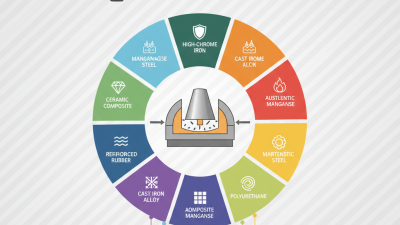
Mining stone crusher parts are wear and replacement components used in jaw, cone and impact crushers. The chart compares typical Brinell hardness ranges for commonly used crusher-part materials. Manganese steel is widely used for jaw plates and cone liners because it work-hardens under impact, while high-chrome iron and martensitic steel are commonly selected for abrasive applications such as impact crusher blow bars. Actual performance depends on ore hardness, feed size, operating conditions and maintenance.

How to Classify Crusher Parts by Machine Type and Function

2026 Best Mining Stone Crusher Parts for Global Buyers

Crusher parts should be classified in two ways: by machine type and by function. Jaw crushers use fixed and movable jaw plates, cheek plates, and toggle plates. Cone crushers require mantles, concaves, eccentric bushings, and thrust bearings. Impact crushers depend on blow bars, impact plates, and rotor assemblies. Gyratory machines use massive mantles and concaves for high-volume primary crushing.

Function matters just as much. Wear parts contact the rock and control product size. Power-transmission parts include shafts, gears, bearings, and couplings. Sealing and hydraulic parts protect moving assemblies from dust and pressure. Structural parts, such as frames and liners, maintain alignment under repeated vibration. This separation helps buyers compare material grade, fit, and replacement frequency instead of comparing part names alone.

The U.S. Geological Survey estimated 1.5 billion metric tons of crushed stone production in the United States during 2024, valued at about 24 billion dollars (USGS, Mineral Commodity Summaries 2025). That scale explains why small wear-rate differences can affect operating costs quickly. The International Energy Agency also reported strong 2023 demand growth for lithium, nickel, cobalt, graphite, and rare earths (Global Critical Minerals Outlook 2024). More hard-rock processing means more demanding crushing cycles. Still, classification is not always clean. A liner may protect the chamber and influence grading simultaneously. Field inspection remains essential. Measure the worn part, check the machine manual, and record feed size, moisture, and operating hours. Guessing can be expensive.

Which Materials and Designs Improve Crusher Part Durability?

2026 Best Mining Stone Crusher Parts for Global Buyers

Crusher part durability depends on matching material strength with the actual rock. High-manganese steel suits heavy impact because it can harden during service. However, it may wear quickly in highly abrasive, low-impact applications. High-chrome alloy often performs better with silica-rich stone, where sliding abrasion dominates. Martensitic alloy can offer a useful balance between hardness and impact resistance. The wrong choice still fails early.

Design matters just as much. A well-shaped wear surface spreads pressure across the crushing chamber. Rounded transitions reduce stress concentration around bolt holes and corners. Replaceable liners should fit tightly, without visible gaps or movement. Controlled heat treatment is essential, but it cannot repair poor casting quality. In field inspections, uneven wear often reveals feeding problems, misalignment, or an unsuitable liner profile. A harder part is not always a better part.

Tips: Check the rock’s abrasiveness and moisture before ordering. Ask for hardness data, chemical composition, and heat-treatment records. Measure worn parts after operation, not only before installation. Keep spare parts dry and protected from sudden temperature changes. Small cracks matter. They may grow quickly under repeated impact. Global buyers should also confirm dimensions, tolerances, and inspection procedures with the supplier. Claims about service life need operating conditions. Without them, comparisons can mislead.

How to Select the Right Crusher Parts for Global Mining Sites

In 2026, selecting crusher parts for global mining sites requires more than comparing prices. Start with the rock. Granite, basalt, limestone, and recycled concrete create different wear patterns. Abrasive ore may demand high-manganese jaw plates, mantles, or concaves with verified hardness data. Softer material can need a different profile. One solution rarely fits every site.

Check the crusher model, feed size, discharge setting, and daily production before ordering. A replacement part must match the machine’s dimensions and operating limits. Confirm cavity design, alloy composition, heat-treatment records, and expected wear life. Ask for inspection reports and batch traceability. These details support reliable purchasing across borders. They also reduce dangerous fitting errors.

Site conditions matter too. Remote mines need parts that tolerate dust, heat, moisture, and irregular maintenance. Measure the current liner before failure, not after it cracks. Keep critical parts in controlled storage, with clear labels and dry packaging. Delivery time should include customs clearance and inland transport. I have seen low-cost parts become expensive after poor fit caused repeated shutdowns. That mistake is easy to repeat. Review actual wear data after each campaign, even when the result looks acceptable. Sometimes the selected profile performs well, but not as expected. That finding should change the next order.

What Quality, Compatibility, and Supply Standards Should Buyers Check?

For global buyers, crusher parts should be judged by fit, metallurgy, and documented performance. The USGS Mineral Commodity Summaries 2024 reported about 1.5 billion metric tons of crushed stone production in the United States during 2023. That volume shows why small wear-rate differences can affect large operating budgets.

Check every part against the crusher’s drawings, dimensions, and application history. Mantles, concaves, jaw plates, and blow bars need correct profiles and seating surfaces. Ask for chemical composition, hardness ranges, heat-treatment records, and batch traceability. Abrasion testing, such as ASTM G65, can support comparisons, but laboratory results may not predict every quarry condition. Rock shape, moisture, feed size, and operator settings still change results.

Supply quality also requires evidence. An ISO 9001-based quality system can improve inspection control, but certification alone does not guarantee a reliable casting. Request dimensional reports, material certificates, photographs, and nonconformance records. Confirm packaging against corrosion, clear labels, replacement identification, and realistic lead times. Maintain critical spares before shutdown periods. It sounds obvious. Many buyers still overlook it. The International Trade Centre and customs authorities also stress accurate product classification and shipping documentation for cross-border trade. Even a technically correct part can become costly when documents, quantities, or delivery dates are wrong.

2026 Best Mining Stone Crusher Parts for Global Buyers - What Quality, Compatibility, and Supply Standards Should Buyers Check?

Practical benchmark data for evaluating wear parts, fit, material performance, inspection records, and international supply readiness.

Crusher Part Typical Application Common Material Grade Typical Hardness or Property Critical Dimensions to Verify Compatibility Checks Quality and Documentation Checks Typical Replacement Indicator Supply Standard for Global Buyers
Jaw Plate Primary crushing of blasted rock, recycled concrete, and hard aggregate. Hadfield manganese steel, commonly around 11–14% manganese; higher-manganese grades may be selected for severe impact. Usually about 180–250 HB in the as-cast condition; the working surface can harden substantially under impact. Overall length and width, tooth profile, mounting-hole position, back thickness, seating radius, and gap dimensions. Crusher model and chamber type; fixed or swing position; feed opening; fastening system; closed-side setting range. Material certificate, heat number, chemical analysis, hardness test, dimensional inspection, casting repair record, and traceability marking. Tooth profile is flattened, plate thickness reaches the site limit, or product shape and throughput become unstable. Protective export packaging, corrosion prevention, part identification, packing list, inspection report, and replacement-pair matching.
Cone Mantle Secondary, tertiary, and fine crushing of abrasive rock and aggregate. Manganese steel; alloy selection depends on feed size, compressive strength, abrasiveness, and impact level. Commonly approximately 180–250 HB initially, with work hardening during operation. Top and bottom diameters, mantle height, seating angle, locking dimensions, minimum thickness, and weight. Head assembly geometry, eccentricity, crushing chamber profile, feed opening, and required minimum and maximum settings. Dimensional report at defined inspection points, hardness mapping, chemical composition, casting quality inspection, and balancing confirmation where applicable. Liner reaches minimum thickness, produces uneven wear, or causes frequent setting changes and reduced capacity. Individual identification, moisture-resistant packing, shock protection, gross and net weight records, and complete shipping documents.
Cone Concave Stationary crushing chamber liner used with a cone mantle. Manganese steel, with chemistry and section thickness selected for the operating duty. Typically about 180–250 HB before work hardening; actual performance depends strongly on impact and feed conditions. Top and bottom diameters, bowl seating surface, liner height, bolt-hole pattern, keyways, and minimum casting thickness. Bowl assembly, mantle pairing, chamber designation, feed arrangement, retaining hardware, and required crushing profile. Check for shrinkage, cracks, excessive weld repair, dimensional deviation, hardness uniformity, and complete heat traceability. Uneven liner wear, loss of required chamber geometry, or liner thickness approaching the approved operating minimum. Matched liner set, clear installation orientation, documented lifting weight, export-grade skid, and spare-fastener identification.
Impact Crusher Blow Bar High-impact crushing of limestone, recycled material, asphalt, and medium-hard rock. Martensitic steel, high-chrome white iron, or composite material selected according to impact and abrasion conditions. Martensitic grades commonly fall near 45–55 HRC; high-chrome grades may be approximately 55–65 HRC, subject to grade and section size. Overall length, width, height, mounting slot, locating surfaces, rotor contact radius, and allowable balance tolerance. Rotor design, locking wedge, rotation direction, blow-bar pocket, material moisture, maximum feed size, and impact velocity. Hardness profile, impact or toughness data where specified, magnetic-particle or dye-penetrant inspection, balance report, and heat number. Wear reaches the permitted profile limit, cracking appears near the mounting area, or rotor balance and product gradation deteriorate. Use protective separators, moisture control, lifting points, orientation labels, and shock-resistant packaging to prevent edge damage.
Impact Crusher Side Liner Protection of impact chamber side walls against abrasive feed and rebound. Manganese steel, martensitic steel, or high-chrome iron depending on impact intensity and abrasiveness. Property range should match the selected blow-bar system; hardness alone should not replace toughness verification. Panel length and width, mounting holes, countersinks, curvature, corner radii, and nominal wear thickness. Chamber wall profile, fastener type, adjacent liner clearance, feed direction, and access for installation. Dimensional records, hardness readings, surface-crack inspection, casting repair declaration, and packing protection for machined faces. Visible wall exposure, hole elongation, cracking, or plate thickness below the safe replacement limit. Pack by installation position, mark left/right or upper/lower location, and provide a complete fastener and quantity list.
Crusher Backing Compound Fills the gap between crusher liners and support surfaces and helps distribute impact loads. Two-component epoxy or other approved crusher backing system with controlled cure characteristics. Performance is normally specified by compressive strength, adhesion, cure time, and service-temperature range rather than hardness alone. Required volume, mixing ratio, layer thickness, packaging size, and usable working time. Crusher cavity volume, liner movement allowance, ambient temperature, surface cleanliness, and manufacturer-approved curing procedure. Safety data sheet, technical data sheet, batch number, shelf life, mixing instructions, and cure-time test record. Cracking, debonding, voids, liner movement, or loss of support after liner installation. Temperature-controlled storage where required, sealed containers, expiration-date control, and hazardous-goods documentation when applicable.
Toggle Plate Jaw-crusher safety and load-transfer component between the toggle seat and moving jaw assembly. Cast steel, ductile iron, or engineered breakable material according to the crusher safety design. The specified fracture or yield behavior is critical; excessive strength can compromise the intended overload protection. Plate length, width, thickness, seat radius, contact angle, pin dimensions, and designed relief section. Toggle-seat geometry, jaw movement, adjustment system, safety-release design, and allowable contact wear. Material certificate, dimensional inspection, visual examination, fracture-zone verification, and confirmation that unauthorized welding is not required. Cracking, deformation, abnormal contact marks, excessive seat wear, or activation of the overload protection system. Clearly marked orientation, individual wrapping, anti-impact packing, and availability of an emergency replacement quantity.
Screening Wear Liner Protection of screen decks, chute zones, transfer points, and high-wear material paths. Abrasion-resistant steel, rubber, polyurethane, or composite liner selected according to material size, moisture, and impact. Abrasion-resistant steel is often supplied around 400–600 HBW depending on the specified grade; polymer liners require tear and abrasion data. Panel thickness, hole pattern, slot length, overlap, edge profile, screen aperture, and support spacing. Screen model, deck configuration, fastening system, material trajectory, operating temperature, and drainage requirements. Hardness or polymer test report, dimensional inspection, hole-position check, batch traceability, and declaration of material composition. Perforations, severe thinning, broken fasteners, panel movement, or loss of required screening accuracy. Panel-by-panel labels, flat protective packing, moisture control, and spare quantity based on planned maintenance intervals.
Crusher Fasteners and Locking Hardware Secures jaw plates, cone liners, impact liners, wedges, and access covers. Alloy steel or other specified high-strength fastener material with compatible nuts, washers, wedges, or locking systems. Strength class, proof load, thread accuracy, and toughness must match the approved assembly specification. Thread diameter and pitch, grip length, head style, wedge angle, washer thickness, and tightening clearance. Liner hole pattern, thread standard, torque requirement, locking method, thermal exposure, and access limitations. Mechanical-property certificate, thread-gauge inspection, torque specification, corrosion protection, and lot traceability. Stretching, thread damage, loosening, corrosion pitting, head deformation, or repeated torque loss. Pack by part number and installation location, prevent mixed lots, and provide quantity reconciliation against the packing list.
General Buyer Acceptance Criteria Applies to all mining crusher wear and maintenance parts purchased internationally. Material and manufacturing route must be stated clearly in the quotation and purchase specification. Acceptance values should be agreed before production and measured using calibrated equipment. Use approved drawings, tolerance tables, inspection points, and a signed revision-controlled specification. Confirm exact machine configuration, operating duty, chamber profile, installation position, and interchangeability limits. Request certificate of conformity, material certificate, dimensional report, hardness results, photos before dispatch, and batch traceability. Reject or quarantine parts with cracks, major dimensional deviation, missing records, mixed identification, or damaged sealing and packaging. Agree Incoterms, lead time, minimum order quantity, warranty terms, spare-parts forecast, export documents, and after-sales response time.
Buyer note: Hardness ranges are indicative industry benchmarks, not universal acceptance limits. Final requirements should be based on the approved drawing, operating conditions, material specification, inspection plan, and applicable contractual standards.