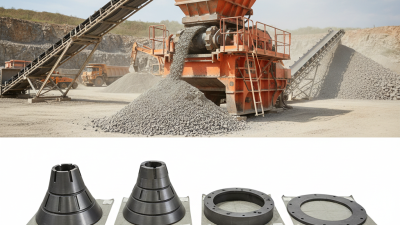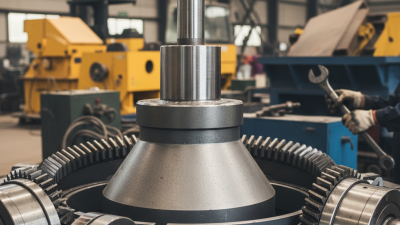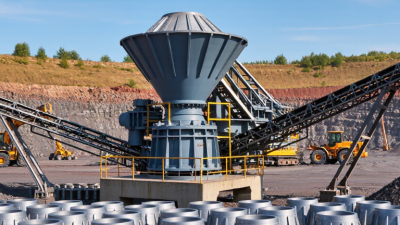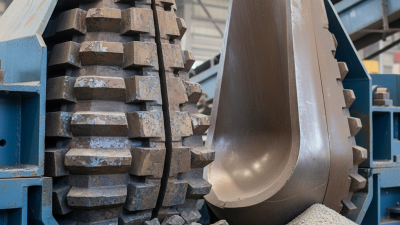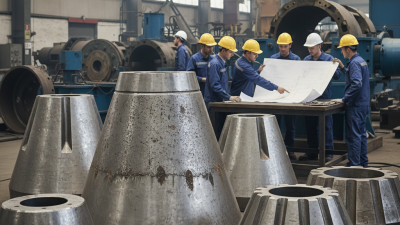
Choosing the right Cone Crusher Bowl Liner can affect product shape, throughput, operating costs, and the time between maintenance stops. Yet there is no universal winner. A liner that performs well on hard, abrasive granite may wear too quickly in softer, wet material. Feed size, chamber profile, crusher model, and operating settings all matter.
This guide compares seven common bowl liner options and explains where each may fit. It considers manganese steel grades, liner profiles, material conditions, and practical signs of wear. Look for details such as uneven grooves, a changing product size, or reduced capacity; these can help identify when a liner deserves inspection. Small clues matter.
The best choice depends on measured performance, not a product label alone. Review the crusher manufacturer’s specifications, confirm compatibility, and compare wear life under similar operating conditions. Ask suppliers for documented results where available. A short trial can still mislead if feed composition or settings change during testing. That is easy to overlook.
This article offers a useful starting point, not a substitute for site-specific engineering advice. It also recognizes a limitation: published comparisons rarely use identical rock, settings, and maintenance practices. Use the seven options to narrow your search, then verify the fit with your equipment and operating data. The right liner should make sense in your chamber, not just on paper.
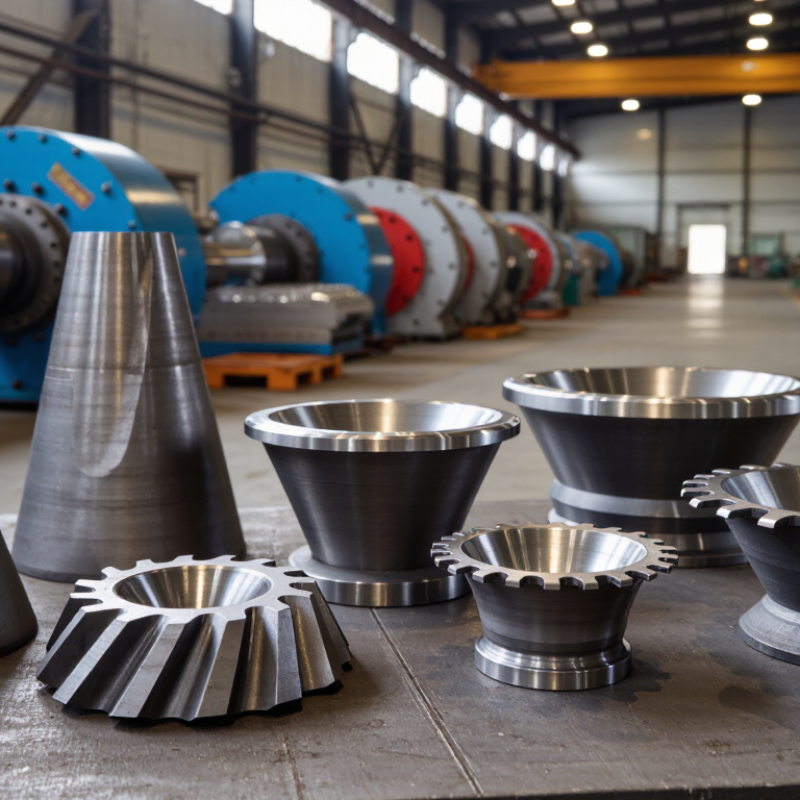
Bowl liners shape the crushing chamber, so their profile directly affects feed movement, reduction, and product size. A well-matched profile helps maintain a steady crushing zone; a worn or unsuitable one can cause uneven loading and fluctuating output. Small changes matter. The U.S. Geological Survey’s 2024 Mineral Commodity Summaries estimated U.S. crushed-stone production at about 1.5 billion tons in 2023. At that scale, even brief production losses can matter, making liner selection and wear monitoring practical operating decisions.
Match the liner profile to feed size, hardness, moisture, and the required product gradation. Manganese-steel liners work-harden under impact, but material grade alone does not guarantee longer service life. Operators should track closed-side setting, tonnes per hour, power draw, and the liner’s wear pattern together. If the setting drifts as the bowl wears, product size and throughput may shift too. A clean wear map helps. Still, feed changes can confuse the picture, and a tidy spreadsheet will not explain every sudden drop. Compare measurements across similar operating conditions before changing the liner design.
Bowl liner performance depends on both alloy and profile. Hadfield manganese steel is common because impact can harden its surface while the interior stays tougher. ASTM A128/A128M Grade B-2 specifies 11–14% manganese and 1.00–1.25% carbon, giving buyers a useful composition reference. High-chromium iron can resist severe abrasion, but it is less forgiving under heavy impact. Alloyed steels offer another balance of wear resistance and toughness. No alloy wins in every quarry.
Design changes matter just as much. A deep, coarse profile can help accept larger feed, while a finer profile may suit smaller feed and tighter product requirements. The bowl’s ribs and cavity shape influence how rock moves through the chamber. A mismatch can cause uneven wear: one side may look fresh while the opposite edge wears thin. That detail is easy to miss. Material selection should reflect feed hardness, moisture, impact, and operating settings—not just expected service life.
Tips: Track liner thickness at several marked points during inspections. Compare those readings with feed size and closed-side setting before changing profiles. Keep the measurements; one shift’s notes are not enough. ASTM composition data is a baseline, not a guarantee of field performance.
What Are the 7 Best Cone Crusher Bowl Liners?
Seven Bowl Liner Options for Different Crushing Conditions
The best liner depends on feed size, rock hardness, and the product you need. The USGS Mineral Commodity Summaries 2024 estimated U.S. crushed-stone production at about 1.5 billion tons in 2023, underscoring the scale of the work. For coarse, tough feed, choose a coarse-profile liner with a wide opening. A standard profile suits mixed feed and general production. Medium profiles balance throughput and product size. Fine profiles help when smaller product is required. Extra-fine profiles can tighten the product further, but may reduce capacity if the feed is poorly graded. Feed matters more.
Two other useful choices address material and operating conditions. A high-manganese liner is commonly selected where repeated impact helps the metal work-harden; a low-impact application may not deliver the same benefit. A thicker, heavy-duty profile can suit abrasive rock or longer planned runs, though it may alter chamber geometry and energy use. Check the feed’s top size, moisture, and gradation before selecting any of the seven options. ASTM International’s aggregate test methods offer a consistent way to assess particle-size distribution. In practice, liner choice is often revised after inspecting wear patterns and sampling the product. That part is easy to overlook. A liner that looks robust can still be wrong for the chamber.
| Bowl Liner Profile | Typical Feed Condition | Common Application | General Product Tendency | Key Selection Consideration |
|---|---|---|---|---|
| Extra-Coarse | Large, relatively coarse feed with limited fines | Primary or early-stage cone crushing where the crusher and chamber are designed for larger feed | Accommodates coarser feed; product is generally less fine than with finer profiles | Confirm the crusher’s maximum feed opening and keep feed within the chamber’s permitted size range. |
| Coarse | Coarse, well-graded feed with a low proportion of fines | Secondary crushing and applications prioritizing capacity over a fine product | Generally suited to higher feed sizes and a coarser product distribution | Check feed gradation, choke-feeding conditions, and the required closed-side setting. |
| Medium-Coarse | Coarse-to-medium feed with some smaller particles | Secondary crushing when feed size and product-size targets fall between coarse and medium duties | Offers an intermediate crushing profile; actual capacity and product size depend on the whole circuit | Review the proportion of fines and avoid selecting a chamber that is too full for the incoming feed. |
| Medium | Mixed feed sizes with a balanced gradation | General-purpose secondary or tertiary crushing | Provides a middle-ground profile for feed acceptance and product sizing | Compare the feed curve and target product curve; liner names and available profiles vary by crusher design. |
| Medium-Fine | Medium-to-small feed, typically with a controlled feed top size | Tertiary crushing or applications requiring a smaller product than a coarse chamber typically produces | Can support finer reduction when the feed and operating setting are appropriate | Ensure the feed is suitably sized and the crusher is not overloaded by excessive fines or poor distribution. |
| Fine | Small, consistently graded feed | Tertiary or final-stage crushing where a finer product is required | Generally favors finer reduction, subject to crusher setting, feed properties, and circuit configuration | Use only within the crusher’s feed-size limits; monitor power draw, liner wear, and product gradation. |
| Extra-Fine | Small feed with a narrow, controlled size distribution | Specialized fine-crushing duties in a compatible cone crusher chamber | Designed for finer crushing conditions; it is not a substitute for a mill when the required size is below the crusher’s capability | Verify chamber compatibility and operating limits, and assess whether the extra-fine profile suits the material and throughput target. |
Selection note: These are generic profile descriptions, not universal chamber specifications. Profile names, feed limits, and performance vary by crusher model. Select a compatible bowl liner using the equipment documentation, feed gradation, material characteristics, target product size, and operating conditions.
What Are the 7 Best Cone Crusher Bowl Liners?
How to Choose a Liner for Your Feed and Product Goals
The right bowl liner depends on what enters the crusher and what must leave it. Start with feed size, rock hardness, abrasiveness, and moisture. A coarse feed may need a chamber with room to accept larger pieces. For finer product, a tighter profile can help, provided the crusher remains within its operating limits. There is no universally best liner.
Compare the seven options by profile and intended duty, not by name alone. Check the chamber shape, feed opening, and expected wear pattern against your machine’s specifications. Then consider whether your priority is throughput, product consistency, or longer wear life. These goals can conflict. A liner that lasts longer may not deliver the particle shape or capacity you need.
Observe the material leaving the crusher. Look for changes in product size, uneven wear, and signs of bridging near the feed area. Small details matter. Keep records of feed conditions and liner service hours; they make comparisons more reliable than memory. A choice can look right on paper and still disappoint in the plant. Recheck it after operating conditions change, and ask a qualified technician to confirm compatibility before installation.
How to choose a liner profile for your feed and product goals
The 1–5 scores are a qualitative selection guide, not measured performance data. Coarser profiles generally suit larger feed, while finer profiles can support finer products when feed size, chamber, and crusher settings are appropriate. Profile names and results vary by crusher; confirm selection with the equipment supplier and site testing.
Uneven wear tells a useful story. A polished band on one side of the bowl liner may point to uneven feed distribution, while deep grooves can signal abrasive material or poor chamber matching. Inspect the liner at shutdown, and record measurements at several marked points around its circumference. A single average can mislead; one thin section may already be close to its service limit.
Look closely.
Stable, well-distributed feed helps the liner wear more evenly. Keep the chamber consistently fed when operating conditions allow, and avoid letting material segregate to one side. Check the closed-side setting, power draw, and product size together; changing one setting to hide a wear problem may create another.
Replace bowl liners as a matched set with the mantle, following the crusher’s specified limits. That matters.
No wear chart explains every unusual groove, so compare measurements with operating history and inspect the whole profile. Small recording errors happen, too. Consistent checks make them easier to catch before they become costly downtime.