Top 10 Jaw Crusher Plate Features You Should Know?
In the mining and construction industries, the Jaw Crusher Plate plays a vital role in crushing materials. With a market value projected at USD 4.6 billion by 2025, the demand for high-quality jaw crushers is rising. The durability and efficiency of the Jaw Crusher Plate directly affect overall productivity. Studies indicate that nearly 30% of downtime in processing operations is linked to wear and tear in crushing equipment.
Understanding the features of the Jaw Crusher Plate is essential for optimizing performance. Key attributes such as material composition, surface design, and wear resistance significantly influence its lifespan. Reports suggest that using advanced alloys can enhance durability by up to 50%. However, it's important to note that not all materials deliver the same results. Some may fail under specific conditions, leading to unforeseen challenges.
Investing in the right Jaw Crusher Plate is crucial for operational success. It is beneficial to continually assess the effectiveness of different types in real-world applications. This approach can help in making informed decisions regarding replacements and upgrades. Ultimately, evaluating Jaw Crusher Plate features can lead to improved efficiency and reduced costs in the long term.
Key Material Properties of Jaw Crusher Plates
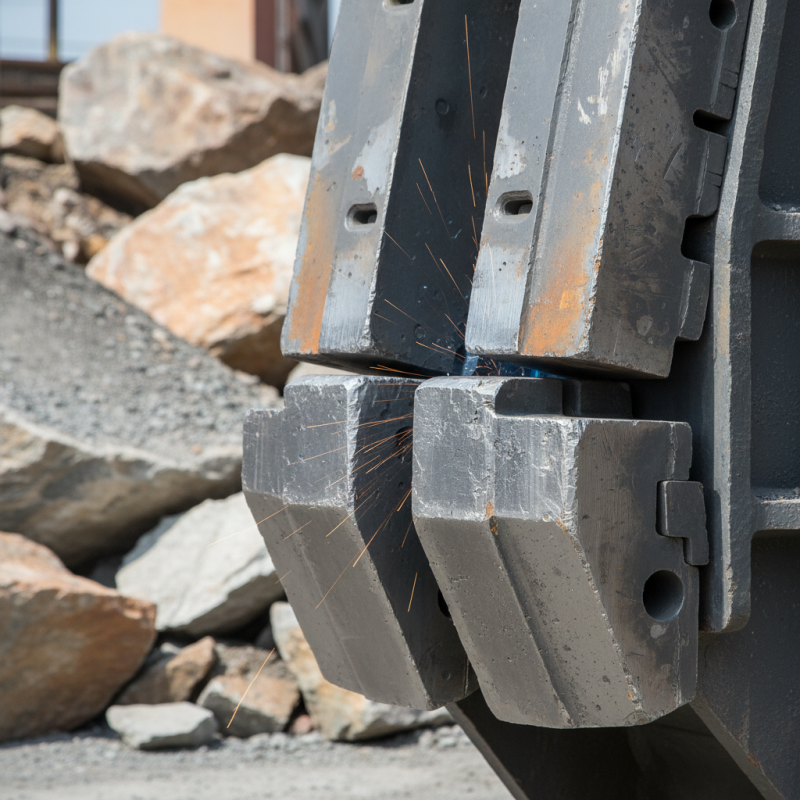
When it comes to jaw crushers, the plate's material properties are crucial for performance. Typically, jaw crusher plates are made from high-manganese steel. This material offers exceptional hardness and toughness. It allows the plate to withstand heavy impact and wear during operation. A well-selected alloy can significantly enhance durability.
Another key property is the surface hardness. This affects how well the plates can resist wear and deformation. Plates with tougher surfaces maintain their shape longer, leading to extended service life. Additionally, a well-maintained surface reduces the risk of breakage during operation.
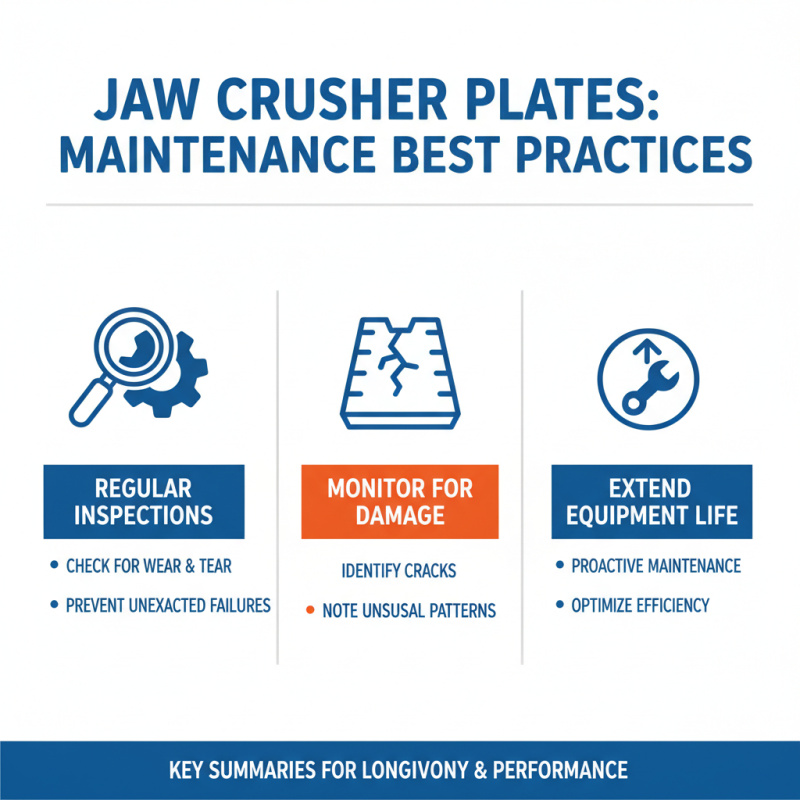
**Tips:** Regular maintenance of jaw crusher plates is essential. This ensures that wear is monitored and replaced timely. Pay attention to wear patterns; irregularities can indicate underlying issues. Always consult professionals for material recommendations tailored to your operating conditions. Quality materials lead to better performance.
Top 10 Jaw Crusher Plate Features You Should Know
| Feature |
Material Properties |
Benefits |
| Hardness |
High hardness value (>55 HRC) |
Increased wear resistance |
| Toughness |
Good shock resistance |
Reduces crack formation |
| Material Composition |
Manganese steel |
Optimal for crushing applications |
| Surface Finish |
Smooth or textured |
Enhances crushing efficiency |
| Weight |
Variable weight |
Encourages stability and balance |
| Design |
Optimal geometry |
Improves material handling |
| Wear Rate |
Low wear rate |
Extends lifespan of plates |
| Installation |
User-friendly design |
Facilitates quick replacement |
| Compatibility |
Fits various models |
Versatile application |
| Cost Efficiency |
Competitive pricing |
Reduces operational costs |
Importance of Hardness and Wear Resistance in Plate Performance
The hardness and wear resistance of jaw crusher plates greatly influence their performance. High hardness often translates to longer service life. Plates with superior hardness can undergo intense crushing without significant wear. This minimizes the need for frequent replacements and maintenance.
When selecting jaw plates, it’s essential to consider the material composition. Different steel grades offer varying hardness levels and impact resistance. Some materials may be too brittle, causing premature failure. Others might not withstand high stress, leading to rapid wear.
It’s important to reflect on the trade-offs in selecting plate materials. A more durable option may add to upfront costs. However, long-term savings can offset this initial expense. Analyzing wear patterns can provide valuable insights into the effectiveness of the chosen material. Understanding how each plate performs in real-world conditions is crucial for optimizing efficiency.
Design Variations: Fixed vs. Moving Jaw Plates
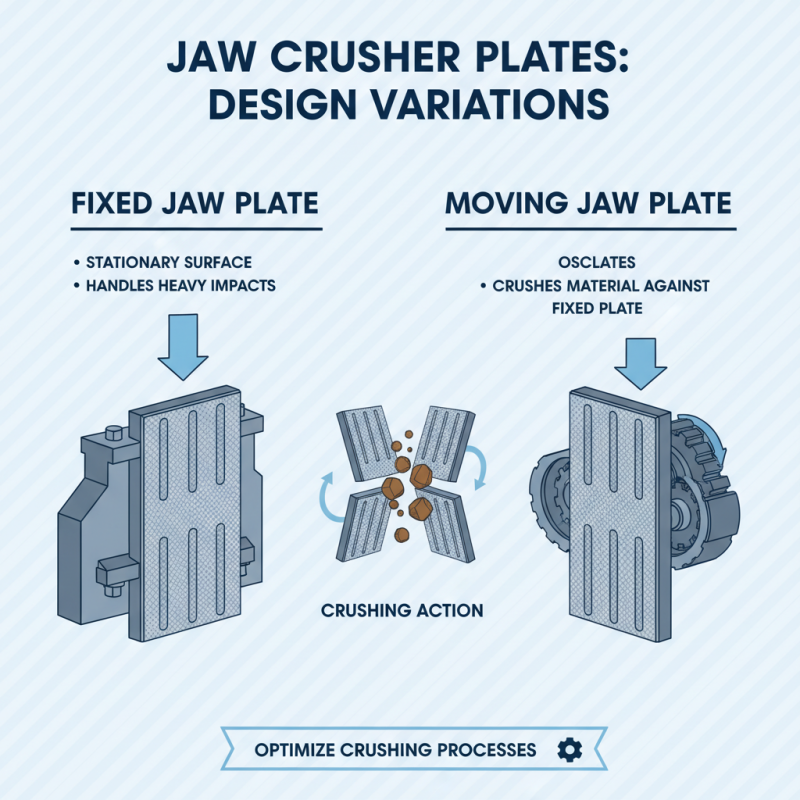
Jaw crushers are essential in the mining and construction industries. They rely on two main components: the fixed jaw plate and the moving jaw plate. Understanding their differences can help you optimize crushing processes. The fixed jaw plate, typically mounted to the frame, remains stationary, providing a stable surface. This design allows it to handle heavy impact forces effectively.
On the other hand, the moving jaw plate plays a dynamic role. It pivots and exerts pressure on the material being crushed. The interaction between these plates generates the compressive force required to break down rocks. However, wear and tear are inevitable. The moving jaw plate can suffer from fatigue and deformation over time, compromising performance.
It's crucial to choose the right materials for both plates to enhance durability. Steel and manganese alloys are common choices, but they come with trade-offs. A harder material may resist wear longer, but it can become brittle. This balance requires careful consideration to avoid unexpected failures. Effective monitoring of wear patterns can help identify when it's time for replacements, ultimately improving efficiency and productivity in your operations.
Impact of Plate Thickness on Crushing Efficiency
The thickness of the jaw crusher plate plays a crucial role in its performance. Generally, plates are available in varying thicknesses. A thicker plate typically offers greater durability and longevity. However, it can also affect the machine's efficiency. Studies indicate that an optimal plate thickness often balances wear resistance with crushing performance.
For instance, industry reports suggest that a plate thickness of 40mm may provide a significant increase in durability. Yet, this thickness may lead to reduced speed during crushing, resulting in lower throughput. An inefficient plate can ultimately increase operational costs. It's vital to analyze the specific requirements of each crushing application.
Mixing thicker and thinner plates in a single crushing chamber can be troublesome. This variation might compromise the effectiveness of the entire setup. Ensuring the right thickness for your application is essential for maximizing crushing efficiency. Therefore, careful consideration of the plate thickness could lead to better performance and reliability in the long run.
Impact of Plate Thickness on Crushing Efficiency