How to Choose the Right Jaw Crusher Plate Material for Maximum Durability
In the competitive landscape of mining and aggregate production, selecting the right *Jaw Crusher Plate Material* is crucial for optimizing equipment performance and longevity. Industry expert Dr. Michael Ferris, a renowned materials scientist, emphasizes, "The choice of jaw crusher plate material directly influences the operational efficiency and overall durability of crushing machinery." With a myriad of options available, it is essential for operators to consider factors such as wear resistance, impact strength, and cost-effectiveness in order to maximize the lifespan of their equipment.
The material selection process can significantly impact the efficiency of the crushing process and the cost implications of maintenance and replacements. High-quality *Jaw Crusher Plate Material* not only contributes to better productivity but also aids in minimizing downtime associated with wear-related failures. Understanding the properties of different materials used for jaw plates will empower manufacturers and operators alike to make informed decisions that align with their operational goals. In the following sections, we will delve deeper into the various types of materials available, their respective advantages and applications, and how to choose the best one for your specific needs.
Understanding the Importance of Jaw Crusher Plate Material Selection
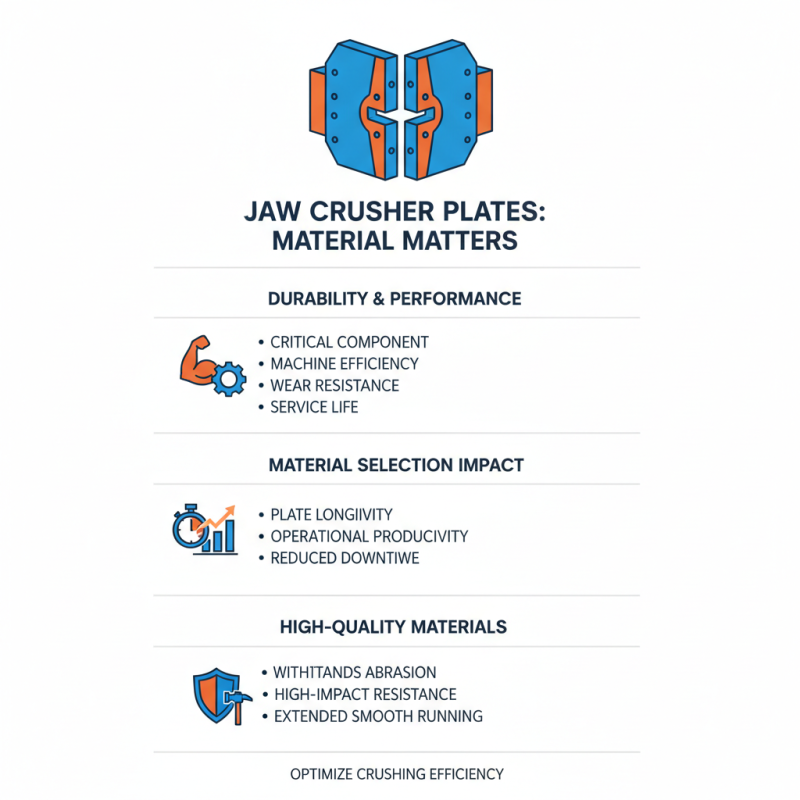
When selecting the right jaw crusher plate material, it is crucial to understand its impact on overall durability and performance. The jaw crusher plate serves as a critical component in the crushing process, directly affecting the machine's efficiency, wear resistance, and service life. Choosing the appropriate material not only influences the longevity of the plate itself but also reflects on the overall productivity of the operation. High-quality materials can withstand abrasive and high-impact conditions, ensuring that the machinery runs smoothly for extended periods.
**Tips:** Consider the specific characteristics of the material you are working with. For instance, a higher hardness level often correlates with improved wear resistance, but you must also weigh the trade-offs, such as potential brittleness. Additionally, examining the environmental conditions can guide you—materials that perform well in dry, abrasive settings may not be as effective in wet or sticky conditions.
Furthermore, it's essential to review the compatibility of the jaw crusher plate material with other components of your crushing system. Mismatched materials can lead to increased wear and tear and ultimately reduce the machine’s effectiveness. Conducting thorough testing and analysis based on application requirements can help identify the best material option for your specific crushing needs, delivering optimal performance and durability over time.
Types of Materials Used for Jaw Crusher Plates and Their Properties
When selecting jaw crusher plate materials, understanding the properties of different materials is crucial for ensuring maximum durability and performance. Typically, jaw crusher plates are made from various types of steel and alloys. The most common materials include manganese steel, chrome-molybdenum steel, and cast iron. Each of these materials has unique characteristics that make them suitable for specific applications in the crushing process.
Manganese steel, known for its high impact strength and ductility, is one of the most widely used materials for jaw crusher plates. With a carbon content usually between 1% and 1.5%, it has a remarkable ability to work-harden, which increases its wear resistance under crushing conditions. This makes manganese steel ideal for handling abrasive materials and ensures a longer service life for the plates. On the other hand, chrome-molybdenum steel provides excellent tensile strength and toughness, making it suitable for applications requiring high resistance to both impact and wear. Cast iron, while less common, can be used for lower impact applications due to its rigidity and good wear resistance at lower operational stresses.
In addition to the mechanical properties, the choice of jaw crusher plate material also depends on factors like the type of crushed material and environmental conditions. Understanding these properties helps manufacturers and operators make informed decisions that maximize the efficiency and lifespan of their jaw crushers, ultimately leading to cost savings and better overall performance.
Jaw Crusher Plate Material Durability Comparison
Factors to Consider When Choosing Jaw Crusher Plate Material
When choosing the right jaw crusher plate material, there are several critical factors to consider that can significantly impact durability and performance. One of the primary aspects is the hardness of the material. Harder plates tend to offer better wear resistance, which is essential in applications involving abrasive materials. However, while hardness is important, it should be balanced with the toughness of the material to prevent premature cracking or failure under impact stress. Materials like manganese steel are often favored for their ability to withstand high abrasion while maintaining structural integrity.
Another factor to consider is the environmental conditions in which the jaw crusher will operate. Factors such as temperature, humidity, and the presence of corrosive elements can influence material performance. For instance, if the crusher is used in a hostile environment, selecting a plate material with enhanced corrosion resistance can prolong its lifespan. Additionally, the specific application of the jaw crusher, whether for mining, recycling, or construction, will determine the best material choice, as different applications can impose varying levels of stress on the plates. Thus, a thorough assessment of both the operational conditions and the intended use is essential to selecting the most suitable jaw crusher plate material.
Comparative Durability of Common Jaw Crusher Plate Materials
When selecting the right jaw crusher plate material, it is essential to compare the durability of the commonly used options. The most widely utilized materials for jaw crusher plates include manganese steel, high chromium cast iron, and alloy steel. Each of these materials possesses unique properties that contribute to its performance and longevity in crushing applications.
Manganese steel is renowned for its high impact strength and resistance to abrasion, making it a preferred choice for many applications. Its ability to work-harden during operation enhances its wear characteristics, ensuring a longer service life. In contrast, high chromium cast iron offers exceptional wear resistance due to its high hardness and structural integrity, making it suitable for applications where material hardness is critical. However, it can be more brittle than manganese steel, which may lead to chipping or cracking under extreme conditions.
Alloy steel, on the other hand, combines elements like nickel, chromium, and molybdenum to improve hardness and toughness. This material can withstand high levels of stress and impact while maintaining its structural integrity. The choice between these materials ultimately depends on the specific application and the type of material being crushed, highlighting the importance of understanding the comparative durability of each option to maximize performance and reduce maintenance costs.
Maintenance Tips for Longevity of Jaw Crusher Plates
To ensure the longevity of jaw crusher plates, regular maintenance plays a crucial role. One of the simplest yet most effective practices is to perform routine inspections for wear and damage. By regularly checking the condition of the plates, operators can identify signs of deterioration early, allowing for timely replacements and reducing the risk of catastrophic failures that could lead to costly downtimes.
Another key maintenance tip is to monitor the lubrication system closely. Adequate lubrication minimizes friction between the plates and reduces wear. It is essential to follow the manufacturer's recommended lubrication intervals and types of lubricants to maintain optimal operation. Additionally, ensuring proper tightness of the bolts and checking for any misalignment can further enhance the durability of the jaw plates. By adhering to these maintenance practices, operators can significantly extend the operational life of their jaw crusher's plates, thereby maximizing their investment.
How to Choose the Right Jaw Crusher Plate Material for Maximum Durability - Maintenance Tips for Longevity of Jaw Crusher Plates
| Material Type |
Hardness |
Tensile Strength (MPa) |
Wear Resistance |
Application Guide |
| Manganese Steel |
Hard |
800-1100 |
High |
Suitable for hard and abrasive materials |
| Alloy Steel |
Medium |
600-900 |
Moderate |
Used for medium hardness materials |
| Chrome-Moly Steel |
High |
900-1200 |
Very High |
Ideal for high-impact applications |
| CERAMIC |
Very Hard |
Variable |
Exceptional |
Best for abrasive materials |
| Cast Iron |
Moderate |
300-600 |
Low |
Generally not used for crushing |