Top 10 Benefits of Flexible Intramedullary Nails for Surgery?
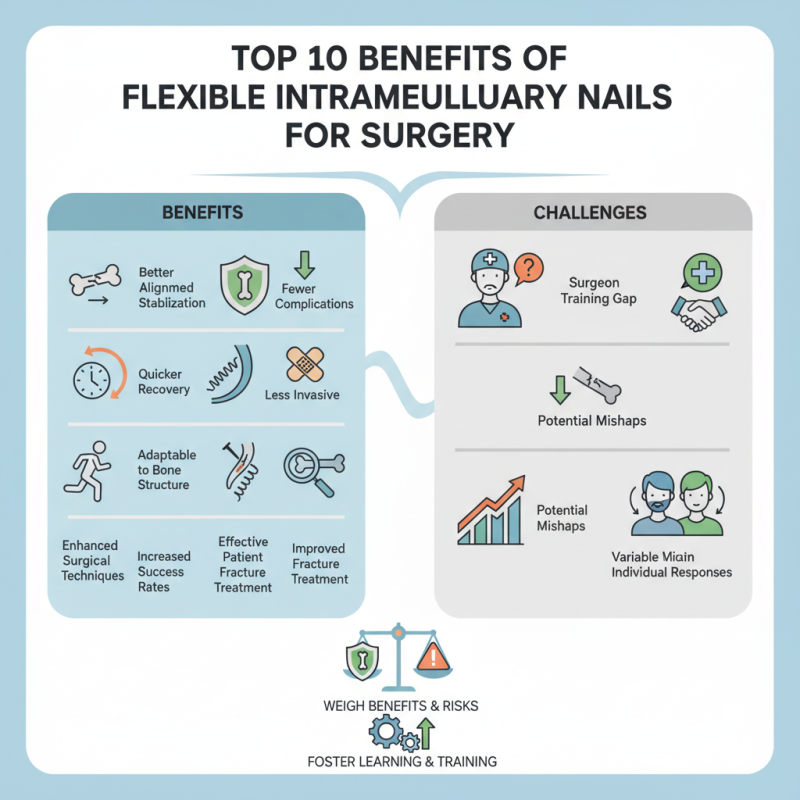
The use of Flexible Intramedullary Nails has transformed surgical techniques in recent years. These innovative devices offer numerous advantages for orthopedic surgeries, particularly in fracture treatment. Their design allows for better alignment and stabilization, resulting in fewer complications and quicker recovery times.
Patients benefit from less invasive procedures. The flexibility of these nails adapts to varying bone structures, making surgeries more adaptable. However, challenges do exist. Some surgeons may not be fully trained in using these modern techniques, leading to potential mishaps.
Moreover, while the outcomes generally improve with Flexible Intramedullary Nails, individual responses can vary. Not every case will lead to the hoped-for results. It is essential to weigh the benefits and risks, encourage training, and foster a culture of ongoing learning within surgical teams.
Advantages of Flexible Intramedullary Nails in Orthopedic Surgery
Flexible intramedullary nails (FINs) have transformed orthopedic surgery significantly. These devices are designed to provide stability while preserving the natural motion of bones. Surgeons often choose FINs for their ability to accommodate various fracture types. They are light and made of materials that allow for bending, which helps in minimizing surgical trauma.
Patients benefit from reduced recovery times due to the less invasive nature of this technique. Traditional methods often involved larger incisions, but FINs require smaller openings. This leads to less blood loss and a lower infection risk. Many surgeons appreciate how FINs align with the body’s biomechanics. Still, there can be a learning curve for the surgical team when implementing this technology effectively.
Despite these advantages, some surgeons may remain hesitant. They might be worried about the durability over time or insufficient trials in certain cases. Each operation presents unique challenges, and flexibility alone does not guarantee success. Proper training is essential, yet not all surgical teams might fully embrace this approach. The need for ongoing education and adaptation is critical in maximizing the benefits of flexible intramedullary nails.
Enhanced Stability and Alignment in Fracture Repair
Flexible intramedullary nails offer enhanced stability and alignment in fracture repair. These devices adapt well to the natural curvature of bones. Their design allows for minimal invasion, which can speed up the recovery process. Surgeons appreciate how these nails support proper alignment. This is crucial during the healing phase. Misalignment can lead to complications.
When the nails are used, they provide excellent compression at the fracture site. This compression helps reduce movement, allowing for better stabilization as the bone heals. Moreover, the flexibility of these nails can accommodate various types of fractures. However, it’s essential to choose the right approach. Any miscalculation in nail size can lead to issues later.
Consideration of the patient's specific anatomy is vital. An individualized plan ensures improved outcomes. Surgeons also face challenges. Sometimes achieving optimal stability may not be as straightforward as expected. Factors like bone quality and patient activity level can complicate the process. Monitoring recovery is essential, and adjustments may be needed along the way. This flexibility in approach can ultimately contribute to successful healing.
Reduced Soft Tissue Damage During Surgical Procedures
Flexible intramedullary nails provide numerous advantages in surgical settings, particularly in reducing soft tissue damage. Unlike traditional fixation methods, these nails minimize the disruption of surrounding muscles, ligaments, and skin. This reduction in trauma promotes faster healing and less post-operative pain for patients. Surgeons can navigate the surgical site with enhanced precision, avoiding unnecessary complications.
When using flexible nails, it’s important to take some precautions. Ensure proper alignment of the nail during insertion. Misalignment can lead to complications, like improper bone healing. It's essential for the surgical team to communicate effectively throughout the procedure, discussing any concerns about soft tissue integrity.
Another aspect to consider is the patient's anatomy. Individual variations may impact the procedure’s outcome. Customized planning is vital in these cases. Surgeons should evaluate the surgical site thoroughly, contemplating how flexible nails will interact with the patient's unique structure. Remember, every surgical decision should prioritize reducing soft tissue damage to enhance recovery.
Improved Patient Recovery Time and Outcomes
Flexible intramedullary nails have gained attention for their role in optimizing patient recovery. These innovative tools support bone alignment and stability during the healing process. The design minimizes the need for extensive incisions, reducing tissue damage. This can result in less pain post-surgery. Patients often report feeling more comfortable during recovery. Shorter hospital stays are another advantage.
The surgical procedure using these nails can be less invasive. The risk of complications may decrease because surrounding muscles and blood vessels are less affected. Many patients experience a faster return to mobility. For some, regular activities resume more quickly. Yet, there are concerns. Not every case benefits equally from this technique. Some patients may have unique challenges that necessitate alternative approaches. It is essential to remember that ongoing monitoring is crucial for all patients. Every surgery carries risks, and healing varies widely from one individual to another.
Versatility in Treating Various Types of Bone Fractures
Flexible intramedullary nails have emerged as a revolutionary option in orthopedic surgery, particularly for bone fractures. Their design allows for versatility in treating various fracture types. They can effectively stabilize comminuted fractures, which are complex and challenging for standard fixation methods. A study in the Journal of Orthopedic Trauma notes that these nails reduce recovery time by up to 30% compared to traditional fixation.
Tips: Always consult with your orthopedic surgeon to discuss the best option for your specific injury. Understanding the complexities of your fracture can ensure the right treatment path.
The adaptability of flexible nails also extends to pediatric cases. They work well for young patients with long bone fractures, providing less invasive treatment. However, every case presents unique challenges. For instance, surgeons may face difficulties with nail length selection. An optimal fit is crucial for ensuring stability and aiding healing.
Tips: Encourage open communication with the medical team about concerns or symptoms during recovery. Early intervention can prevent complications, paving the way for a smoother healing process.
Top 10 Benefits of Flexible Intramedullary Nails for Surgery
Conclusion
Flexible Intramedullary Nails have emerged as a significant advancement in orthopedic surgery, offering multiple advantages that enhance patient care. One of the primary benefits is their ability to provide improved stability and alignment during fracture repair, which is crucial for optimal healing. Additionally, these nails minimize soft tissue damage during procedures, leading to less postoperative pain and a smoother recovery process for patients.
Furthermore, Flexible Intramedullary Nails are versatile tools that can effectively address a variety of bone fractures, making them invaluable in diverse surgical scenarios. The cost-effectiveness of these nails also contributes to long-term benefits for healthcare systems, ultimately making them a favorable option for both patients and medical providers. Overall, the implementation of Flexible Intramedullary Nails represents a significant step forward in enhancing surgical outcomes and patient experiences in orthopedic treatment.